

Nitrogen is often one of the biggest costs in growing rice, yet not all the nitrogen applied ends up in the crop. The literature review in a paper in the Can Tho University Journal of Science cites studies showing that rice takes up less than about 40% of the nitrogen applied, and that most of it is lost through ammonia (NH₃) volatilisation. So if Neb26 is added to urea and less nitrogen is applied, can rice yields hold up? This is one of the few independent studies in Vietnam to put that question to the test in the field.
Where and how was the study done?
Paper: “Effects of reducing nitrogen fertilizer plus nBPT, Neb26 on rice growth and yield, and nitrogen use efficiency in rice soil at Tam Binh district – Vinh Long province”, Can Tho University Journal of Science, vol. 51, part B (2017), pp. 39–45, DOI 10.22144/ctu.jvn.2017.077.
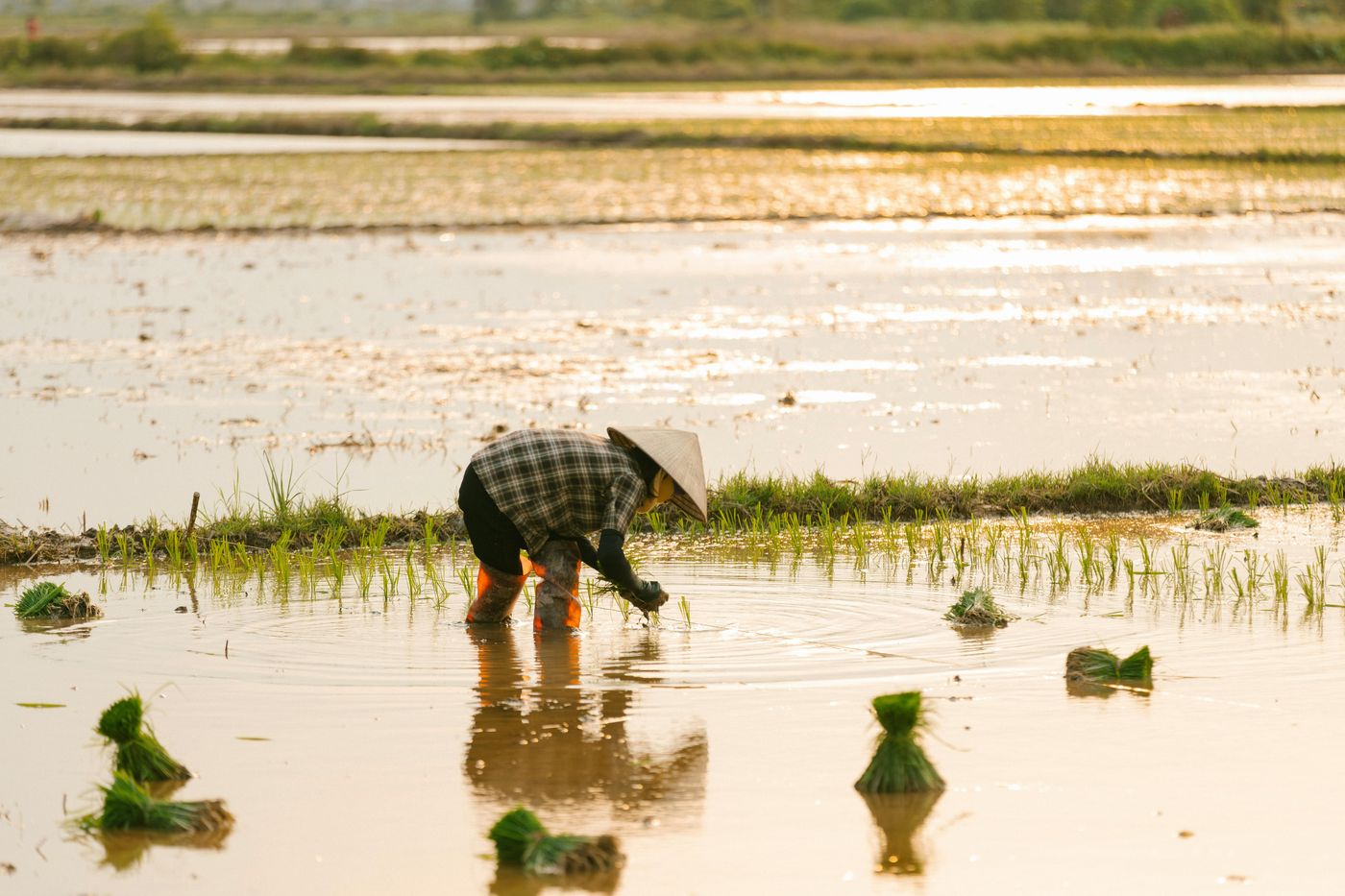
Place and time: a rice field in Mỹ Lộc commune, Tam Bình district, Vĩnh Long province, autumn–winter crop from June to November 2014.
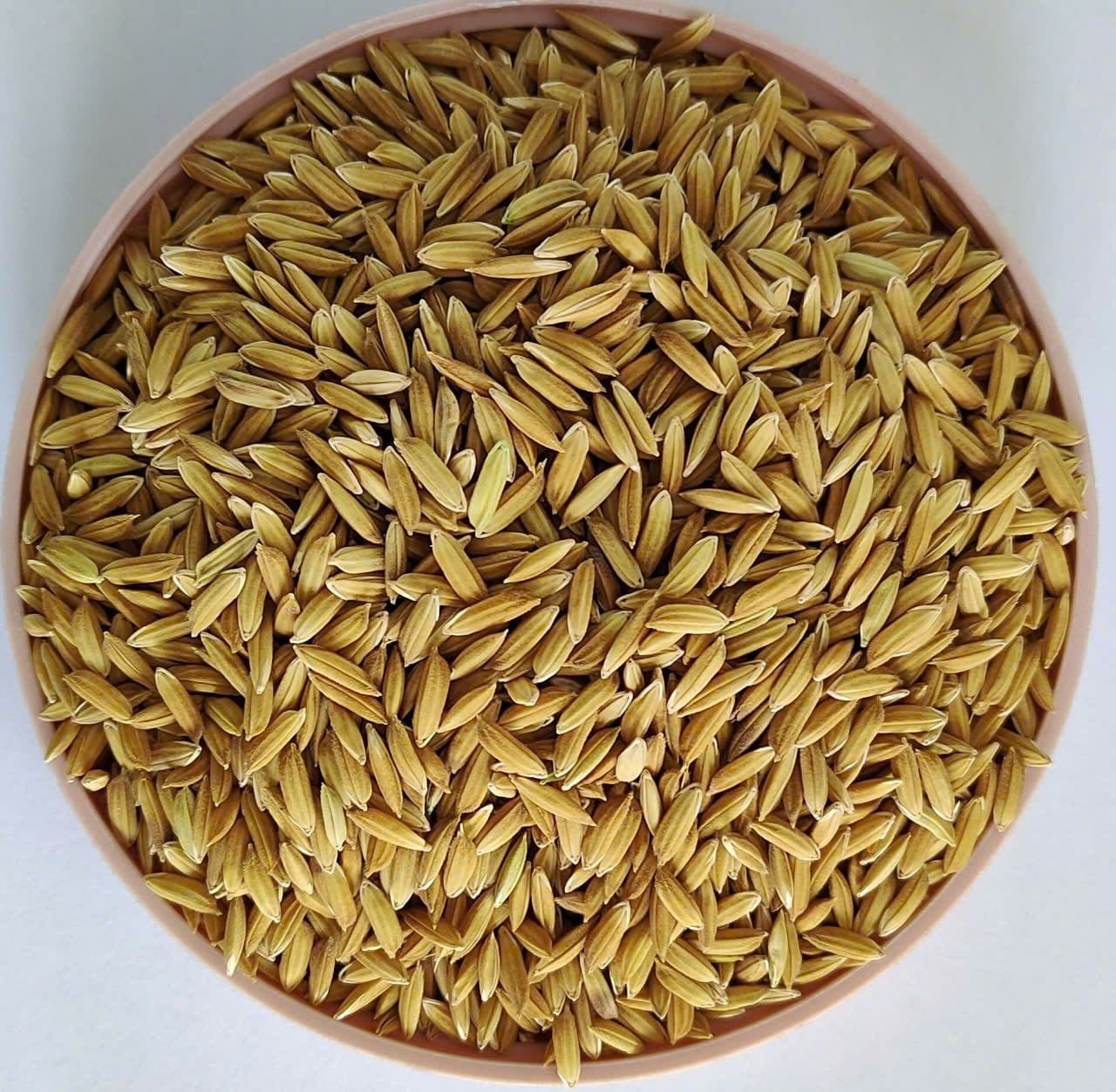
Variety: OM5451, a 90–95-day rice.
Local fertiliser practice: 90N – 60P₂O₅ – 30K₂O, split into three applications at 10, 20 and 45 days after sowing.
Design: randomised complete blocks, 5 treatments, 4 replications, plots of 35 m².
The five treatments compared
Phosphate and potash were the same in every plot; only the amount and form of nitrogen changed:
0N: no nitrogen.
100%N: the full local nitrogen rate.
75%N + nBPT: 25% less nitrogen, as urea with added nBPT.
75%N + Neb26: 25% less nitrogen, as urea with added Neb26.
50%N + Neb26: 50% less nitrogen, as urea with added Neb26.
Main findings
Yield: no difference between nitrogen rates
| Treatment | Yield (t/ha) | Agronomic efficiency (kg grain/kg N applied) |
|---|---|---|
| 0N | 2.9 | – |
| 100%N | 5.3 | 26.3 |
| 75%N + nBPT | 5.4 | 33.5 |
| 75%N + Neb26 | 5.3 | 31.3 |
| 50%N + Neb26 | 5.0 | 42.6 |
The nitrogen treatments yielded about 5.0–5.4 t/ha, with no statistically significant difference between them. Panicles per m² and the share of filled grains did not differ either; 1,000-grain weight and grains per panicle did not differ between the nitrogen treatments.
Growth: shorter plants at 50% nitrogen
Tiller numbers at harvest did not differ between treatments. Leaf chlorophyll readings (SPAD) at 20 and 30 days after sowing were also similar across the nitrogen treatments. Only plant height at harvest was lower at 50%N + Neb26: 74.7 cm against 80.7 cm at 100%N.
Nitrogen use efficiency: higher with reduced nitrogen plus Neb26
The share of fertiliser nitrogen taken up by the crop reached 72.6% at 75%N + Neb26 and 74.3% at 50%N + Neb26, against 57.4% at 100%N. Agronomic efficiency, the extra kilograms of grain per kilogram of nitrogen applied, was highest at 50%N + Neb26 (42.6 kg) and significantly higher than at 100%N (26.3 kg).
How to read this result
The result is encouraging, but it needs to be read within its limits:
It is one trial, on one alluvial soil, with one variety, in one season.
The trial had no treatment with reduced nitrogen but without Neb26. The authors themselves recommend further comparisons of reduced nitrogen with and without Neb26 or nBPT to show clearly what the additive contributes.
At 50% nitrogen the yield was slightly lower in absolute terms (5.0 against 5.3 t/ha), although not statistically different, and the plants were shorter at harvest.
So farmers should not make big cuts to nitrogen on their own fields on the strength of a single trial. Follow the instructions on the bag and talk to a field technician before making changes.
NEB-26 (USA) in Minh Tâm fertilisers
NEB-26 is a root-exudate technology product made in the USA, imported and distributed in Vietnam by Minh Tâm. Every Minh Tâm-branded fertiliser has NEB-26 (USA) added; the bag reads “+ NEB 26 Hoa Kỳ”. According to the manufacturer, root exudates are not living organisms, so NEB-26 is not a microbial product.
Application rates for each crop are printed on the bag and set out on each product page. This article only summarises published results; Minh Tâm took no part in the study.
Read more about NEB-26 (USA), Minh Tâm Urea and our rice fertiliser guide. For advice on your own fields, leave your details on the Contact page or call the hotline on 0812 492 555.
Source: Can Tho University Journal of Science, vol. 51, part B (2017), pp. 39–45, DOI 10.22144/ctu.jvn.2017.077 (read the paper, in Vietnamese).